Showing posts with label Animal Rescue. Show all posts

Tuesday, June 11, 2013

Interceptor has been discontinued, Sentinel takes it's place

April 13, 2013
Novartis, so far, hasn’t posted an official statement about Interceptor on their website. However, the following is an excerpt from a letter that was sent to US veterinarians earlier this month.

“…Novartis Animal Health, US, Inc. is happy to announce that Sentinel Flavor Tabs are back and at a price that is sure to please everyone.

Effective today, all sizes of Sentinel Flavor Tabs are priced at nearly half of 2011 prices, and these new low prices are here to stay. Now, even more pet owners can afford to provide year-round heart worm, intestinal parasite and flea protection to their dogs.

We’re creating a new standard of care by offering broader spectrum protection than similarly priced heart worm medications and significant savings over comparable spectrum products. Therefore, we have discontinued production of Interceptor® (milbemycin oxime) Flavor Tabs® for the U.S. market.
Thank you for your patience and commitment to Novartis Animal Health, US, Inc. and the Sentinel Flavor Tabs brand. We apologize for the disruption we have caused you, your practice and your clients. We hope to earn back your trust. To that end, we have built significant inventories to support expected demand…”

So in short if you Interceptor online for sale, maybe skip the online purchase as last production for Interceptor was in 2011 and it only had a 3 year shelf life. Also Novartis never sold this product to any other distributor other than Vet Offices. So what you might be purchasing might be a black market type of product. Save your pet from the risk, just switch and say good-bye to Interceptor.

Update May 2013


Sunday, January 13, 2013

Surrendering your family pet


When you surrender your  family pet to a Rescue or Animal Shelter, please be as honest as possible on their current vaccinations, heart worm status, if they are spayed, quirks and more. No matter how bad you feel at the time of surrender you will give your pet a better chance if any of us know what we are dealing with from the beginning. So put your embarrassment away and just tell us the truth and the facts on your pet that your about to surrender. This is putting your pet first in such a life alerting situation, remember they can’t speak to us on these matters and extra vetting is very expensive on the back end for us.

It even heps us and sooths the animal if we know the name you called in during your ownership. For us to make up a name, start trying to call them by a strange name it makes the assessment part of any animal much harder.

Just give us all the facts, the good and the bad. We don't care, we just need to know as much as possible to better help the animal find a second chance at life.

Monday, January 7, 2013

What part did you play in this situation?


A story with no name but a huge purpose behind it. Many times we focus on “who” did it, do we know them or do we have a grudge against them, but I want this story to be about the “issue” and only the issue that we see as a growing trend on social media and throughout the Animal Lovers Community.

If you’re on Facebook,  it’s most likely you see the heartbreaking photos of thousands of animals that are slated to be killed every day unless “pulled” and taken from the County Shelter, but do many of us slow down to ask, where are they all going once they are pulled? Are they getting Veterinarian care, the amount of food and water they need to sustain, are they out of the cold or away from the dead heat in the summer, are they being socialized or just left to fend for themselves in small cages?

It’s time we all become more responsible with not only the animals we drop off at our County Animal Shelters for them to deal with, but the efforts and number people that come into play once these animals find themselves listed on death row.

Do we just turn our heads and say as long as they are “pulled” from the Shelter it’s better than death? Do we allow people we know to get in over their heads and stop putting the animals care first? Do we continue to make excuses for reckless rescuers, hoarders or do we stand up and put the animals first no matter who’s feelings we hurt?

In North Carolina we are listed as a “High Kill” state, mainly due to the lack of spay and neuter programs in place by each of the 100 Counties but also due to the lack of any Commercial Breeder Bill, so what happens when you have an overgrowing numbers of unwanted animals in the State of NC, they land in our County Shelters for 72 hrs. prior to be euthanized if not “pulled”.

Some find their way into loving homes via a local adoption, some find themselves in the care of a responsible rescue organization but what we forget or overlook are those that end up with a reckless rescue/hoarder types personalities who can’t stop their behavior. One who feels that as long as they aren’t thrown in the local landfill they are better in their care and home no matter what the conditions, no matter if they received proper Vet care and no matter if they live tied to tree’s or in small cages from this day forward.

Again this is not about the “who”. For once I’m making it about the “issue” and how all of us need to step up and become responsible for not only our own actions as animal owners, animals rescuers but as the animal loving community we need to be.

Don’t let a friend get in over their head, stop transporting animals to people you have not done home visits with and do not over burden one of your friends with a mass amount of animals that they can clearly not care for.

Pictured below is a local NC Animal Cruelty Case, it’s not pretty to view, it’s not heartwarming to see how these animals were cared for and without a doubt this ladies friends and fellow co-workers in the AR Community should share these animal cruelty charges as they facilitated in helping this lady be over burden by countless Shelter Animals.  There is no way anyone who went to her home as a  friend or counterpart in the Animal Rescue Community didn’t see she needed help and most importantly that the animals needed help and out of these conditions.

As you view these pictures I feel you need to know what about 50% of the animals taken from this property had to be euthanized due to lack of Vet care, Health Issues and Cage Aggression. Some animals could only circle around and around with kennel craze and ended up being euthanized.

This is not Responsible Rescue, this is not putting the animals first and without a doubt this does not need to continue here in North Carolina.
 
 Tied to a tree with no Shelter from the rain and no access to water
 Yes, you see a dog in this kennel. With trash all around him and on top of his kennel.
 Yes, you see another dog in this tiny kennel hidden under the counter and with trash all around him.
 Yes, 3 more dogs who could barely turn around in their kennels. This is how they were kept.


 Another dog in the back kennel with trash on the top of his kennel.


Does this wake you up? Is this how someone in the Animal Rescue Community acts? Is this who you just sent animals to as you skipped a home visit? We can all do better than this for these animals and it's time for that to take place here in 2013.

Friday, January 4, 2013

Wanted, Rita Mueller for Animal Cruelty.

Rita Mueller has been pulling dogs from North Carolina Animal Shelter's since 2010, she also pulls from Florida, Texas, Ohio and some other States. How many animals have fallen victim to her animal cruelty issues.

Stop sending US dogs to Canada, this is WHO you are sending them to, people like this. Never send an animal to someone you have not meet in person, preformed a home visit on as well as completed a Vet check on.

This is heartbreaking news, but we knew this back in 2010. Maybe now others will wake up and stop sending animals to people they never have meet on social media.  How many of you had a hand in sending her dogs from a State bound Animal Shelter?

Where is Braveheart that was sent to her from Florida? I think we know that answer.


News Release header

Woman wanted in animal-cruelty investigation,
Rita Mueller, 50,
Photograph of woman released


Broadcast time: 13:59
Thursday, January 3, 2013

31 Division
416-808-3100


The Toronto Police Service is seeking the public’s assistance locating a woman in connection with an animal-cruelty investigation.

It is alleged that:

- on Friday, August 24, 2012, she walked into the office of the Toronto Animal Services on Sheppard Avenue West

- while in a room with a dog, she killed the dog by choking it

- the woman then left the scene

Rita Mueller, 50, of Bolton, is wanted for:

1) Killing or Injuring an Animal
2) Cause or Permit Unnecessary Pain
3) Disobey Court Order

She is described as white, 5’4”, 115 lbs., with blonde hair and blue eyes. She frequents Peel Region and the City of Barrie.

She also operates a dog rescue company called Scooby’s Dog House and Rescue.

Police are concerned that she may be in possession of other animals who may be in danger.

Anyone with information is asked to contact police at 416-808-3100, Crime Stoppers anonymously at 416-222-TIPS (8477), online at www.222tips.com, text TOR and your message to CRIMES (274637), or Leave A Tip on Facebook. Download the free Crime Stoppers Mobile App on iTunes, Google Play or Blackberry App World.


Constable Tony Vella, Corporate Communications, for Detective Constable Tamara Lawrynowycz, 31 Division


Woman wanted in animal-cruelty investigation,
Rita Mueller, 50,
Photograph of woman released


Rita Mueller, 50, wanted in animal-cruelty investigation
Above: Rita Mueller, 50, wanted in animal-cruelty investigation


Click on the link:

http://www.torontopolice.on.ca/newsreleases/25392

Saturday, December 22, 2012

Could you spare a can opener for a County Animal Shelter?


Did you know that many County Animal Shelters only have one hand crank can opener? What happens if it gets lost or broken when it’s feeding time for the puppies & kittens in the Shelter? Will an employee be allowed to run out and buy one on the spot, most likely not.  Why not help our County Animal Shelter’s with some small inexpensive donations of items such as this to make their job easier and less stressful while helping the animals out at the same time.


 So let’s lend a hand to some of these County Shelters while we work thru how to become a more humane and caring State for all these homeless animals.


Small steps like this can build a bridge for a more humane shelter experience for most of these animals. Let’s put them first in the equation.

Wednesday, October 10, 2012

Deadly Treats - 5 Tips to Keep Your Dog Safe

The other day a client told me about her friend who had recently lost their dog. This dog was quite young and a much-loved part of the family, so their sudden passing was quite a shock. 

Although the vet was not sure quite what had happened…the family suspected that it was related to their dog's treats. Just before she got sick, they started giving her treats made of dried chicken jerky. They did some research after finding out that similar treats had led to illness and death in other dogs, they felt like her death may have been the treats. 

I'm not sure what happened to that dog but those owners really believed it was the treats. Geeze, who thinks that their dog's treats could be deadly?

A recent recall of chicken jerky treats made in China made the news across the world and encouraged many dog lovers to think very carefully about the snacks they give their dogs.  Treats, table scraps and human foods can all cause problems in dogs. I want to give you a few tips on how to keep your dog healthy.

1. Don't Give Bones. Dogs are notorious for chewing on things they shouldn't and items given to dogs as “treats” can have grave effects. In particular, many people think that giving their dogs chicken or turkey bones during the holidays is a safe option, but they soon end up in the emergency room after their dog swallows one of the bones. The sharp edges can lead to bleeding, internal injuries, and worse.

2. Don't Feed Table Scraps. Another problem is that human food can contain toxic ingredients that can seriously poison your dog. The tasty onion rings, grapes, raisons or other high fat meals that you love can make your dog sick to your pet, especially if your pet is very small.

3. Be Careful With Treats. The best way to keep your dog safe from toxicity or injury due to treats is to only feed them treats which are designed for canine consumption.

4. Check Recalls. Regularly check the FDA recall list and make sure that their food or treats are not anywhere on there. Monitor your dog closely for any signs of injury or illness and if something feels “off,” trust your instincts. Stop giving your dog the treat immediately and call your vet if symptoms occur.

5. Pick Treats for Your Dogs Size. Treats that are too big or too small can cause problems by getting caught in your dog's mouth or esophagus. Items that are too small for your large dog can be easily swallowed.

I don't mean to scare you…there are still lots of great ways for your dog to enjoy both treats and toys in a safe and healthy way. One of my favorite ways to do this is with Spinz; they're a treat and a toy all in one!

Spinz is a 100% edible snack is made in the USA and spins around as your dog chews for twisty, turny fun. Spinz also help clean your dog's teeth, strengthen their gums, and freshen their breath. It's so many wonderful things in a small package.  It's a very neat treat.

spinz

The best options are those like Spinz with a variety of sizes so your dog gets exactly what they need.

Keep your dog safe! If you have a question about a treat to feed your dog – talk to your vet first to make sure it is safe.
Until next time,

Dr. Jon

Monday, October 1, 2012

How Heartworm Happens: The Life Cycle


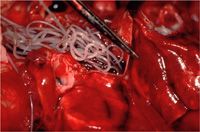
First, adult female heartworms release their young, called microfilariae, into an animal's bloodstream. Then, mosquitoes become infected with microfilariae while taking blood meal from the infected animal. During the next 10 to 14 days, the microfilariae mature to the infective larval stage within the mosquito. After that, the mosquito bites another dog, cat or other susceptible animal, and the infective larvae enter through the bite wound. It then takes a little over 6 months for the infective larvae to mature into adult worms. In dogs, the worms may live for up to 7 years. Microfilariae cannot mature into adult heartworms without first passing through a mosquito.


What Are the Signs of Heartworm Disease?

For both dogs and cats, clinical signs of heartworm disease may not be recognized in the early stages, as the number of heartworms in an animal tends to accumulate gradually over a period of months and sometimes years and after repeated mosquito bites.


Recently infected dogs may exhibit no signs of the disease, while heavily infected dogs may eventually show clinical signs, including a mild, persistent cough, reluctance to move or exercise, fatigue after only moderate exercise, reduced appetite and weight loss.


Cats may exhibit clinical signs that are very non-specific, mimicking many other feline diseases. Chronic clinical signs include vomiting, gagging, difficulty or rapid breathing, lethargy and weight loss. Signs associated with the first stage of heartworm disease, when the heartworms enter a blood vessel and are carried to the pulmonary arteries, are often mistaken for feline asthma or allergic bronchitis, when in fact they are actually due to a syndrome newly defined as Heartworm Associated Respiratory Disease (HARD).


How Do You Detect Heartworm Disease?
Heartworm infection in apparently healthy animals is usually detected with blood tests for a heartworm substance called an "antigen" or microfilariae, although neither test is consistently positive until about seven months after infection has occurred.
 
Heartworm infection may also occasionally be detected through ultrasound and/or x-ray images of the heart and lungs, although these tests are usually used in animals already known to be infected.
 
Prevention
Because heartworm disease is preventable, the AHS recommends that pet owners take steps now to talk to their veterinarian about how to best protect their pets from this dangerous disease. Heartworm prevention is safe, easy and inexpensive. While treatment for heartworm disease in dogs is possible, it is a complicated and expensive process, taking weeks for infected animals to recover. There is no effective treatment for heartworm disease in cats, so it is imperative that disease prevention measures be taken for cats.
 
There are a variety of options for preventing heartworm infection in both dogs and cats, including daily and monthly tablets and chewables, monthly topicals and a six-month injectable product available only for dogs. All of these methods are extremely effective, and when administered properly on a timely schedule, heartworm infection can be completely prevented. These medications interrupt heartworm development before adult worms reach the lungs and cause disease.
 
It is your responsibility to faithfully maintain the prevention program you have selected in consultation with your veterinarian.


Wednesday, September 26, 2012

Orange County Low Cost Rabies Vaccination Clinic


Low-Cost Rabies Vaccination Clinics

 Saturday, Sep 29 10:00a

Orange County Animal Services Center, Chapel Hill

Orange County’s Animal Services Department is offering two low cost rabies vaccination clinics on Saturday 29th September from 10:00 am to 12:00 PM celebration of the 6th annual World Rabies Day.

Tuesday, September 25, 2012

Person County Raid in NC

 
More than 100 animals were seized from a Person County farm by the Humane Society of the United States and Person County Animal Control Tuesday.
The Person County Sheriff's Office served a search and seizure warrant on the property and found 39 horses and nearly 70 small-breed dogs, cats and birds being housed in unsanitary conditions.

Officials became concerned about the facility after receiving complaints from the community. The horses at the farm were described as being very thin. Some were suffering from medical issues that required immediate attention.

Many of the dogs and cats suffered from eye infections, skin infections and other signs of severe neglect.

"The Humane Society of the United States is glad to help Person County Animal Control with this very sad case of neglect," said Kim Alboum, North Carolina state director for The HSUS. "The conditions in this home are egregious and these animals desperately needed rescue. Now they are on the path to much better lives."

"The situation here deteriorated so badly that we knew it was time to act," said Ron Shaw, director of Person County Animal Control. "I'm incredibly grateful that we did, because the conditions for the small animals living inside were deplorable."

The owner surrendered the animals, and they will all be taken to area shelters for immediate evaluation and treatment by veterinarians.
Classifieds | Report A Typo | Send Tip | Get Alerts | See Click Fix
Follow @abc11 on Twitter | Become a fan on Facebook

(Copyright ©2012 WTVD-TV/DT. All Rights Reserved.)

Thursday, August 23, 2012

More Puppy Mills Busts in NC

Large dogs seized from Wilson breeding operation

Click here to find out more!

Dogs seized from Wilson breeders
Share
35
25
Twitter
10
0
e-mail print friendly
A Wilson couple was charged Thursday with animal cruelty after more than two dozen large-breed dogs were seized from a breeding operation, authorities said.
The raid at a property on Evansdale Road is the second time this month that law enforcement officers and animal welfare advocates have seized dogs and puppies from a breeding operation in eastern North Carolina.
Wilson County deputies removed 28 Great Danes, Mastiffs and Dobermans from outdoor kennels behind a mobile home, with the assistance of the Humane Society of the U.S., the SPCA of Wake County and the Great Dane Rescue Alliance.
"What led to this was just years of complaints from consumers who were getting sick puppies," said Kim Alboum, state director of the Humane Society.
Alboum said state law doesn’t require inspections of breeding operations, and complaints weren’t enough for authorities to step in until animal cruelty could be demonstrated.
"What we saw in this particular facility were a lot of dogs with old and new wounds," she said. "We saw a lot of infection – staph, mange – but many of the dogs were just so, they just seemed broken."
Breeders Cyndi and Joe Williams were each charged with one count of animal cruelty, and authorities said more charges are possible. Their court date was set for Oct. 8.

Local rescue groups have taken in many of the breeding dogs the breeders have gotten rid of over the years, Alboum said.
"(One) dog's mother was surrendered four weeks ago, and she was in absolutely horrendous condition," she said. "When she was surrendered, (her puppy) was only 10 days old."
Veterinarians checked the dogs before 16 of the animals were sent to the SPCA of Wake County and the other 12 to the Great Dane Rescue Alliance for further care and housing.
Because the dogs were seized, their future could be tied up in court. None of the dogs will be put up for adoption until the legal issues are resolved, officials said.

Monday, August 6, 2012

NC might just have the right man in Legislation, GO Jason Saine


A North Carolina state lawmaker says he plans to introduce a bill next year that would regulate puppy mills.
More Info
Focal Point: "Puppies and Politics"Focal Point: 'Puppies and Politics'

First-term Rep. Jason Saine, R-Lincoln, said Monday that he and Rep. Craig Horn, R-Union, have been discussing the matter for the past couple of weeks but that a bust Friday at an alleged puppy mill in Leland prompted him to speak publicly about it.

Brunswick County sheriff's deputies and animal rights advocates rescued 160 dogs, 26 birds and one cat in the raid of the breeding operation inside a doublewide trailer without electricity.
Many of the dogs were matted, caked in filth, covered in fleas, and in need of veterinary care. Some have broken jaws from severe tooth decay.

"No animal should be treated that way," Saine said. "We're in a place in society now where I think, certainly, we can have some reasonable regulation that prevents instances like that happening."
According to the Humane Society of the United States, about half of all states have some type of regulation on commercial breeders.

Animal rights advocates have been trying for years – most recently in 2010 – to get similar regulations in North Carolina, but they have gotten nowhere.

Kim Alboum, director of the Humane Society's state chapter, says that there are regulations for breeders who sell to pet stores or to research laboratories but there is no oversight regarding sales to the general public.

Ninety percent of breeders, she says, sell to the general public through newspaper advertisements and the Internet.

"There are no state standards for breeders. They don't even have to register. Federal laws don't cover most of them, either," she said. "We have to wait until these animals are literally suffering and dying before we can go in. We could avoid so much pain for the animals if we just had minimum standards for them."

Over the past year, there have been nine puppy mill busts in the state – more than any other state in the country, according to Melanie Kahn, national director of the Humane Society's campaign to stop puppy mills.

"Almost every product sold in this country is subject to some sort of regulation, but somehow dog breeding is not," she said.

But dog breeders and groups that represent their interests say that puppy mill regulations could have unintended consequences for legitimate and responsible dog breeders.

The North Carolina Federation of Dog Clubs recently opposed proposed federal regulations on Internet dog sales. Many of its arguments are similar to their reasons for opposing puppy mill regulations.

For example, the federation says, regulations could create unreasonable financial hardships for home-based hobby breeders, who don't generate the same level of income as commercial breeders.
"It would threaten the future of a vast number of small, responsible dog owners and breeders, as well as have long-term implications on our agriculture industry," NCFDC President Peter Lunding said.
Larry Sorenson, of Clayton, has bred and shown dachshunds for 35 years and has been recognized by the American Kennel Club as a breeder of merit. He also says that a poorly written law could end up hurting good breeders.

"We're not opposed to reasonable, enforceable laws," he said. "The problem is in the drafting of the laws – definitions. What's the definition of a puppy mill situation? Is it a number? Is it a procedure?"
A clearer definition of what constitutes a puppy mill, he said, would make him more comfortable with regulations.

He adds that recent busts prove that the state's current animal cruelty laws are strong enough.
"We have had a number of convictions now that people are finding these out, and they are being brought to the light and being eliminated," he said.

But Kahn disagrees.
"We know the current laws aren't working, because we've had so many raids in North Carolina," she said. "All of those raids have been because the situation has risen to the level of animal cruelty. That's why authorities have been able to go in."

In Friday's Brunswick County case, the dogs' owners, Andrew and Amelia Millis, of Wilmington, were arrested on charges of animal neglect and animal cruelty. Both were in the Brunswick County jail Monday afternoon under $1.5 million bonds.

The SPCA of Wake County has taken in 39 of the dogs and puppies seized from the Millises.
Spokeswoman Mondy Lamb said Monday that some of the dogs are facing serious health problems but that others should be ready for adoption in about two to three weeks.
Anyone interested in adopting a dog should contact the SPCA.

Sunday, August 5, 2012

50 Counts of Animal Cruelty in Cleveland County NC

NC woman facing multiple animal cruelty charges


» Comments | Post a Comment

A Cleveland County woman is facing charges after authorities say she was keeping approximately 50 dogs, cats and rabbits on her property.

County animal control officers say 62-year-old Carolyn White Kirby faces multiple charges of animal cruelty. She is free on bond, and it's not known whether she has an attorney.

Animal control supervisor Tripp Bowling said many of the animals were housed in small cages in the yard or inside the home with no electricity, air conditioning or lights. He said an anonymous call last weekend tipped officers to the situation.

Some of the dogs appeared to be healthy and well-fed while others looked malnourished.

Bowling said Kirby told authorities she loved the animals but couldn't care for them. He said the animals are now in the county's custody.

Saturday, August 4, 2012

The only relief it had was death


The black and white pit bull who lived at 1068 Lavender Road in Grover, N.C. had a dog house, and food and water dishes, but the heavy, logging-style chain secured around her neck prevented her from reaching them.

Instead, day in and day out, through the scalding hot days, she stared at them as her mouth grew dry and her stomach churned in hunger.

Finally, dehydration and starvation dropped her weakened body to the ground where she laid and looked at the bowls and house which could have provided some relief from her exquisite suffering.

Alas, death closed her eyes forever - allowing her to slip away from her tortured existence.

The man allegedly responsible for this dog's suffering is 31-year-old Bradley Eugene Short.

According to Thursday's Gaston Gazette, police arrested and charged him on Tuesday with felony killing an animal by starvation, misdemeanor disposition of dead domesticated animal and misdemeanor restraining dog in a cruel manner.

An animal control officer for Cleveland County stated in a report:

“The heavy logging-type chain was affixed to a leather collar around the animal’s neck,”

“The chain was knotted several times and appeared to restrict the animal’s movement, where access to the dog house and bowls located near the animal could not be made.”

Short, the man responsible for tethering this dog behind a mobile home and allowing her to starve to death, posted a $5,000 bond and walked out of jail on Wednesday.

he black dog’s decomposing body is stretched out under the baking sun, nose pointed at the empty food dish several feet out of reach.

The heavy chain around her neck is tethered to a stake pounded in the dirt.

A white plastic igloo sits nearby, also out of reach.

“It’s a whole different meaning of neglect,” said Sam Lockridge, Cleveland County health services coordinator. “It’s one of the most horrific things I’ve seen in my 26 years, as far as tethering goes.”

Bradley Eugene Short, 31, was arrested Tuesday and charged with felony killing an animal by starvation, misdemeanor disposition of dead domesticated animal and misdemeanor restraining dog in a cruel manner.


Animal’s movement restricted

According to a report by Cleveland County Animal Control officers, a woman called Animal Control on Monday to report a dead dog she found at a home at 1068 Lavender Road in Grover.

She said it looked as if the dog was abandoned.

When an officer went to investigate, he found a dead black and white pit bull mix tethered about 50 yards behind a mobile home, according to the report.

“The heavy logging-type chain was affixed to a leather collar around the animal’s neck,” the report states. “The chain was knotted several times and appeared to restrict the animal’s movement, where access to the dog house and bowls located near the animal could not be made.”

The report stated the two pet bowls had what appeared to be old rain water in them and were full of mosquitoes.

Officers weren’t able to find the owner Monday but returned the next day and found a white barrel had been placed over the animal’s body.

While officers were still on the scene, Short showed up and told officers he found the dead dog that morning and had returned to bury it, according to the report.

Animal Control officers said Short did not live at that address.


‘The only relief it had was death’

The dog was dead for at least two weeks by the time it was found, the report stated.

According to Animal Control, the dog died as a result of starvation and was restrained in a cruel manner that violated the county’s tethering ordinance.

Short was arrested Tuesday and taken to the Cleveland County jail annex. He posted his $5,000 bond by Wednesday morning.

Lockridge said the animal suffered for weeks.

The only relief it had was death,” he said.

Lockridge said cases such as this one are the reason the county adopted a tethering ordinance last year.

The ordinance lists the proper ways to tether an animal, defined as a means to tie or fasten an animal on a chain, leash or other device so it can only move within a set radius.

The ordinance states the tether should be at least 10 feet long with swivels on both ends and cannot exceed 10 percent of the animal’s body weight.

The tether should be attached to a properly fitting harness or collar to prevent choking, strangulation or pain and the animal should have access to clean water, food and shelter.

If the ordinance is violated, a $100 fine is possible and in extreme cases, animal cruelty charges.


Reach reporter Rebecca Clark at 704-669-3344.