�
Showing posts with label Humane Lobby Day. Show all posts

Thursday, November 29, 2012

It's not about the people, it's about the animals ONLY


It has never been or will be personal for me, my work, questions and care for the animals is just that, it’s about them. So maybe it’s time for some of the other Animal Advocates to stop spinning the facts, same with some Shelter Employees. If it was about you I would without a doubt mention your name, take your inflated ego and leave it at the door. Animals are dying by mass numbers here in NC, many transported illegally to unknown locations up North with no vaccinations. This is not Responsible Rescue, if you really care about the animals you work so hard to get “pulled” from a kill shelter then why don’t you seem to care where or what happens to them after the “pull”. Just being out of the shelter is not “ SAFE”, you might of just sent these animals to live Animal Research Facilities, to a hoarder or to an animal abuser. I’m sorry if you think answering questions is  “drama”, that alone shows you have much to hide.
 
Again this is about the animals who have no voice on what takes place to them, the best thing you could do for these animals is to follow them from pull to adoption and make sure they are cared for, otherwise you are doing more harm than good to the bigger picture for those of us that work to better change and enhance the NC Animal Welfare Act and Statues.
 
Responsible Rescue means staying involved after the "pull", fully vetting an animal, spay and neuter, home visits on the people you hand these animals off to. Dropping them off to anyone in a Burger King parking Lot is not caring for these animals.


Monday, October 15, 2012

No more Gas Chamber for Shelter Animals in Person County NC

As reported by the Courier Times Oct 12, 2012. Person County has stopped using the Gas Chamber and switched to 100 percent lethal injection for euthanasia cases. Way to go Person County but my question is why is any North Carolina County Animal Shelter using a Gas Chamber as after all it's the right thing to do to pull all these chambers out. We dont have to have a law telling us to not kill our unwanted pets via a Gas Chamber, just have a heart and end this old school way of killing in all of North Carolina. What County will be next to end this barbaric way of killing and to do it freely by their choice? Have compassion when it comes to taking their lives, give them dignity and not shove them into a GAS CHAMBER to die in such a horrific death. Thank you Person County for taking a step forward in 2012..... who's next?


Monday, October 1, 2012

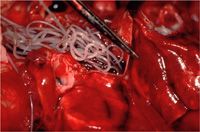
How Heartworm Happens: The Life Cycle


First, adult female heartworms release their young, called microfilariae, into an animal's bloodstream. Then, mosquitoes become infected with microfilariae while taking blood meal from the infected animal. During the next 10 to 14 days, the microfilariae mature to the infective larval stage within the mosquito. After that, the mosquito bites another dog, cat or other susceptible animal, and the infective larvae enter through the bite wound. It then takes a little over 6 months for the infective larvae to mature into adult worms. In dogs, the worms may live for up to 7 years. Microfilariae cannot mature into adult heartworms without first passing through a mosquito.


What Are the Signs of Heartworm Disease?

For both dogs and cats, clinical signs of heartworm disease may not be recognized in the early stages, as the number of heartworms in an animal tends to accumulate gradually over a period of months and sometimes years and after repeated mosquito bites.


Recently infected dogs may exhibit no signs of the disease, while heavily infected dogs may eventually show clinical signs, including a mild, persistent cough, reluctance to move or exercise, fatigue after only moderate exercise, reduced appetite and weight loss.


Cats may exhibit clinical signs that are very non-specific, mimicking many other feline diseases. Chronic clinical signs include vomiting, gagging, difficulty or rapid breathing, lethargy and weight loss. Signs associated with the first stage of heartworm disease, when the heartworms enter a blood vessel and are carried to the pulmonary arteries, are often mistaken for feline asthma or allergic bronchitis, when in fact they are actually due to a syndrome newly defined as Heartworm Associated Respiratory Disease (HARD).


How Do You Detect Heartworm Disease?
Heartworm infection in apparently healthy animals is usually detected with blood tests for a heartworm substance called an "antigen" or microfilariae, although neither test is consistently positive until about seven months after infection has occurred.
 
Heartworm infection may also occasionally be detected through ultrasound and/or x-ray images of the heart and lungs, although these tests are usually used in animals already known to be infected.
 
Prevention
Because heartworm disease is preventable, the AHS recommends that pet owners take steps now to talk to their veterinarian about how to best protect their pets from this dangerous disease. Heartworm prevention is safe, easy and inexpensive. While treatment for heartworm disease in dogs is possible, it is a complicated and expensive process, taking weeks for infected animals to recover. There is no effective treatment for heartworm disease in cats, so it is imperative that disease prevention measures be taken for cats.
 
There are a variety of options for preventing heartworm infection in both dogs and cats, including daily and monthly tablets and chewables, monthly topicals and a six-month injectable product available only for dogs. All of these methods are extremely effective, and when administered properly on a timely schedule, heartworm infection can be completely prevented. These medications interrupt heartworm development before adult worms reach the lungs and cause disease.
 
It is your responsibility to faithfully maintain the prevention program you have selected in consultation with your veterinarian.


Wednesday, September 26, 2012

Walk for Animal Protection in Mebane NC


Walk for Animal Protection (7th Annual)

Saturday, Oct 6 10:00a to 2:00p
 at Paws4Ever, Mebane, NC

 Bring the family--including the dogs! Join us for the 7th Annual Walk for Animal Protection at the Village Green in Southern Village to raise money for Paws4ever and the animals waiting to find their forever homes.

 10:00 am--2 pm

Activities, demonstrations, music, vendors and much more

Noon
2-mile fun walk led by a surprise Grand Marshall

Saturday, August 4, 2012

The only relief it had was death


The black and white pit bull who lived at 1068 Lavender Road in Grover, N.C. had a dog house, and food and water dishes, but the heavy, logging-style chain secured around her neck prevented her from reaching them.

Instead, day in and day out, through the scalding hot days, she stared at them as her mouth grew dry and her stomach churned in hunger.

Finally, dehydration and starvation dropped her weakened body to the ground where she laid and looked at the bowls and house which could have provided some relief from her exquisite suffering.

Alas, death closed her eyes forever - allowing her to slip away from her tortured existence.

The man allegedly responsible for this dog's suffering is 31-year-old Bradley Eugene Short.

According to Thursday's Gaston Gazette, police arrested and charged him on Tuesday with felony killing an animal by starvation, misdemeanor disposition of dead domesticated animal and misdemeanor restraining dog in a cruel manner.

An animal control officer for Cleveland County stated in a report:

“The heavy logging-type chain was affixed to a leather collar around the animal’s neck,”

“The chain was knotted several times and appeared to restrict the animal’s movement, where access to the dog house and bowls located near the animal could not be made.”

Short, the man responsible for tethering this dog behind a mobile home and allowing her to starve to death, posted a $5,000 bond and walked out of jail on Wednesday.

he black dog’s decomposing body is stretched out under the baking sun, nose pointed at the empty food dish several feet out of reach.

The heavy chain around her neck is tethered to a stake pounded in the dirt.

A white plastic igloo sits nearby, also out of reach.

“It’s a whole different meaning of neglect,” said Sam Lockridge, Cleveland County health services coordinator. “It’s one of the most horrific things I’ve seen in my 26 years, as far as tethering goes.”

Bradley Eugene Short, 31, was arrested Tuesday and charged with felony killing an animal by starvation, misdemeanor disposition of dead domesticated animal and misdemeanor restraining dog in a cruel manner.


Animal’s movement restricted

According to a report by Cleveland County Animal Control officers, a woman called Animal Control on Monday to report a dead dog she found at a home at 1068 Lavender Road in Grover.

She said it looked as if the dog was abandoned.

When an officer went to investigate, he found a dead black and white pit bull mix tethered about 50 yards behind a mobile home, according to the report.

“The heavy logging-type chain was affixed to a leather collar around the animal’s neck,” the report states. “The chain was knotted several times and appeared to restrict the animal’s movement, where access to the dog house and bowls located near the animal could not be made.”

The report stated the two pet bowls had what appeared to be old rain water in them and were full of mosquitoes.

Officers weren’t able to find the owner Monday but returned the next day and found a white barrel had been placed over the animal’s body.

While officers were still on the scene, Short showed up and told officers he found the dead dog that morning and had returned to bury it, according to the report.

Animal Control officers said Short did not live at that address.


‘The only relief it had was death’

The dog was dead for at least two weeks by the time it was found, the report stated.

According to Animal Control, the dog died as a result of starvation and was restrained in a cruel manner that violated the county’s tethering ordinance.

Short was arrested Tuesday and taken to the Cleveland County jail annex. He posted his $5,000 bond by Wednesday morning.

Lockridge said the animal suffered for weeks.

“The only relief it had was death,” he said.

Lockridge said cases such as this one are the reason the county adopted a tethering ordinance last year.

The ordinance lists the proper ways to tether an animal, defined as a means to tie or fasten an animal on a chain, leash or other device so it can only move within a set radius.

The ordinance states the tether should be at least 10 feet long with swivels on both ends and cannot exceed 10 percent of the animal’s body weight.

The tether should be attached to a properly fitting harness or collar to prevent choking, strangulation or pain and the animal should have access to clean water, food and shelter.

If the ordinance is violated, a $100 fine is possible and in extreme cases, animal cruelty charges.


Reach reporter Rebecca Clark at 704-669-3344.

Monday, June 4, 2012

Athens Lab Piles up Federal Violations

FOR IMMEDIATE RELEASE
Tuesday, May 29, 2012


Please contact Elizabeth Goldentyer to demand that TRS Labs of Athens (GA) receive the largest fine possible under the Animal Welfare Act for the negligence which killed several animals without access to water and allowed another to receive “severe bite wounds.”

Please insist that the USDA issue a fine, and let Dr. Goldentyer know that she MUST take action now!
Dr. Elizabeth Goldentyer
USDA/APHIS/AC
920 Main Campus Drive, Suite 2000
Raleigh, NC 27606
(919) 855-7100
Betty.J.Goldentyer@usda.gov


Contact: Michael Budkie, SAEN www.saenonline.org, saen@saenonline.org, (513) 575-5517
Attn: Assignment Desk

Athens Lab Piles up 10 Federal Violations in 6 Weeks; Multiple animals sick and dying at TRS lab

ATHENS, GA – Recently obtained federal reports reveal that negligence at the TRS lab of Athens (GA) has left multiple animals sick/dying resulting in ten federal violations in six weeks.

USDA inspection reports for TRS labs reveal a total of ten violations from 3/8/12 – 4/24/12 in areas of veterinary care, housing, sanitation, enclosures, and experimental supervision.

Sick animals including dogs and gerbils have been documented by federal inspectors. Several animals died without access to water. One animal had “severe bite wounds.” Another showed signs of a severe bacterial infection.

Research Watchdog Group SAEN has contacted the USDA to insist on a federal fine for the deaths of these animals.

“When animals die through negligence incompetent labs should pay the price,” said Michael A. Budkie, A.H.T., Executive Director SAEN. “Allowing animals to die without water, receive severe bite wounds, and suffer from bacterial infections is in excusable.”

Federal reports reveal that in 2011 TRS labs experimented on 241 dogs, 129 cats, 18 hamsters, 18 ferrets, and 793 gerbils.

All USDA reports are available upon request from SAEN.

North Carolina Humane Lobby Day, June 13, 2012

Raleigh, NC: Humane Lobby Day 2012 - June 13
Legislative Building Auditorium (3rd Floor)

Think only professional lobbyists can lobby? Think again! The Humane Society of the United States, ASPCA, Susie’s Law, and North Carolina Voters for Animal Welfare invite our members and supporters to participate in the North Carolina Humane Lobby Day in Raleigh, where you’ll make a tremendous difference for animals.

This is an exciting opportunity to meet directly with your elected officials or their staff about legislation that will significantly impact animals. There will be a briefing on tips for lobbying and an overview of pending animal legislation which will prepare you to meet your elected officials and advocate for animals..

Legislators are most motivated when their constituents make time to meet with them face to face. RSVP today to lend your voice for animals and make a difference in North Carolina. Contact Kimberley Alboum if you have additional questions.

Tell Your Friends
Date:Wednesday, June 13, 2012
Time: 9:00 AM - 4:00 PM
Address:
16 West Jones Street
Raleigh, NC 27601
If you'd like to attend this event you can RSVP online.